
City to focus on women
Empowerment and Infrastructure

By Nangamso Mabindla
29 May 2007
AN improved and properly maintained infrastructure, the growth of new suburbs, the empowering of women owned business and an improved safety net package for poor households are just some of the key promises contained in the 2007/08 Buffalo City budget.
These areas were identified by Buffalo City executive Mayor Zintle Peter when she tabled her second state of the city address and budget speech at a special council meeting at the East London City Hall on Tuesday 29 May. The city will spend R2, 6 billion for the 2007/08 financial year.
Of this amount, R2,366-billion will fund operational functions and a further R372-million will be spent on capital projects.
Before outlining the budget highlights for the next financial year, Peter first highlighted the city’s successes for the 2006/07 financial year.
"On the service-delivery front, we must give credit primarily to our engineers for once again ensuring, for the fifth successive year, that 100 per cent of our Municipal Infrastructure Grant (MIG) funding has been spent in their financial year," said Peter
Peter said that this pattern of success from the city engineers has led to a significant increase in the allocation of MIG funding to Buffalo City over the Medium-term Expenditure Framework period.
"The National Treasury is becoming more confident of Buffalo City’s commitment and capacity to utilise these resources."
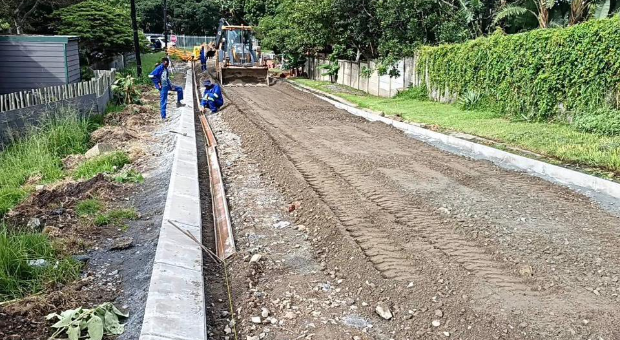
Some of the successes emanated from the Mayoral Imbizo project that aimed to identify areas of concern among the city’s residents. "Because of the Mayoral Imbizo project new street-lights are being installed in various parts of Buffalo City where needs were most pressing, gravel roads are being bladed or regravelled and a number of surfaced roads that were in a serious state of disrepair are being resurfaced to extend their life-span," she added.
During the 2006/07 financial year a number of electrical projects to the tune of R60 million including the electrification of schools in Duncan Village, Mzamo’mhle, Mdantsane, Tyutyu and the Airport Residential area were successfully completed on behalf of the provincial government.
Turning her attention to the next financial year Peter said that after awarding a minimum of 60 percent of contracts to companies that have HDI credentials in the 2006/07 financial year, the city should consider women led businesses for the next financial year.
"Considering the challenges of empowerment of women who are often doubly disadvantaged, I intend to recommend to Council in the new financial year, and I call upon you all for your support, that the target for contracts awarded specifically to companies in which women have a majority stake should be increased to not less than 10 per cent," said Peter
Looking at the rate of unemployment which has increased to 39 per cent Peter said that the city needed to do something to tackle this challenge. However, despite some of the challenges that face the city, 78 per cent of its residents still trusted the municipality.
"We have challenges, but we also have opportunities as well. I believe that we stand on the threshold of a significant upswing of investment in our city’s coastal areas facilitated by the good offices of the Buffalo City Development Agency, together with the real prospect of success of the municipality’s efforts to unlock Transnet properties for development."
She said the upswing was going to get a further boost as the city wanted to offer itself as a base camp for a World Cup team, and improve its profile as a tourist destination.
"Our property market has shown growth far beyond inflation for a number of years, even in historically disadvantaged areas. This has included a welcome recovery for the inland property market over the past three years," she added
Automobile manufacturer Daimler Chrysler has also shown confidence in the city in its R2-billion investment into the manufacturing of the next generation C Class Mercedes Benz.
Peter said her budget "recognizes the struggles of those on the margins of our economy by increasing by 15 per cent welfare package of free basic services to an average amount of R237.56 per household".
She said the budget would recognize the urgency of addressing areas of critical infrastructural disintegration by increasing the allocation for repairs and maintenance by an amount in excess of 25 percent in 2007/2008, with a further 30 percent in 2008/2009.
"I wish to highlight particularly an innovation that Buffalo City first introduced during this financial year, namely the special Mayoral Projects that arose as a direct response to the needs of communities identified during our Imbizo consultation programme," said Peter.
"These were largely funded out of savings identified from the operating budget to the tune of almost R18 million in 2006/2007. In view of the ongoing success of these projects, I am asking Council to approve that this amount be increased in the coming financial year to R30-million."
On housing, the city secured in excess of R40-million for the continuous development of the Reeston, Potsdam, Manyano, Thembelihle and Tyutyu projects. In the next financial year water backlogs are due to be addressed, with the largest project to supply the Needs Camp and Ncera area being costed at R15-million.
The city will spend a further R15-million on upgrading pedestrian crossings in Mdantsane especially closer to schools and other high risk areas.
"We will continue to offer support to in excess of 50 000 households in the broader Buffalo City who are not able to meet the costs of basic services, while extending the net of our billing system to those who are able to pay," Peter said