

It consists of three Branches whose responsibilities include the following:
Construction Branch
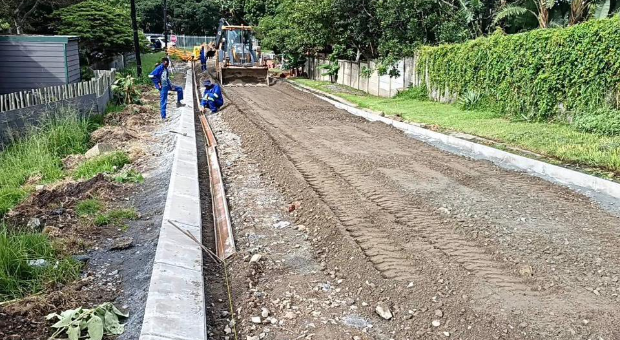
- Construction of surfaced and gravel roads (including road-side furniture),
- Construction of traffic and pedestrian facilities on proclaimed Roads (including signage, traffic circles, raised pedestrian crossings),
- Construction of sleeved road crossings for services across proclaimed roads,
- Construction of minor stormwater systems, and
- Construction of small civil engineering works.
Roads Branch
- Maintenance and construction of surfaced proclaimed roads (including road-side furniture),
- Maintenance and construction of gravel proclaimed roads (including road-side furniture),
- Maintenance and construction of major and minor stormwater systems,
- Maintenance and construction of minor and major structures (culverts, bridges, retaining walls),
- Maintenance of railway sidings, and
- Managing all activities within the road reserve (design approvals, wayleaves, accommodation of utilities, traffic calming facilities).
Project Management Unit
- Monitoring the expenditure of all Grant funding (including MIG, ADM and DBSA) for infrastructure projects,
- Coordinating of all projects serviced by the Unit in terms of feasibility studies and submission of business plans,
- Ensuring that capacity development objectives are met through project implementation,
- Projects database and information management and preparation and submission of all necessary progress reports to Council and Funding Agencies, and
- Evaluation of projects to assess the impact of the implemented infrastructure projects.
Project Implementation Unit
- Prepares preliminary designs and feasibilities studies to determine project viability and internal operational capacity,
- Carries out all aspects contract management and administration, including tender reporting, evaluation and award,
- Ensures all work sites are maintained and operated in terms of applicable Health and Safety legislation,
- Ensures that all communities in which work is undertaken are briefed and receptive of the project and that local labour arrangements are in place, and
- Implements, manages and reports on projects carried out in terms of the Expanded Public Works Programme.
The table below shows the extent of the road and rail infrastructure in Buffalo City:
|
| | |
|
| Bituminised roads | 1 295 km |
|
| Gravel roads | 2 112 km |
|
| Surfaced sidewalks | 2 000 km |
|
| Stormwater drains | 1 500 km |
|
| Number of catch pits | 26 000 |
|
| Rail sidings | 25 km |
Frequently asked questions
Roads
There is a pothole in the road outside my home. When will you fix it?
You need to contact the Roads Department on (043) 705-2096/2073 to report the problem. Your complaint will be added to a list that is collected daily by the superintendents. Work is then prioritised and handed to the teams responsible for road patching. Depending on the backlog, a pothole can take up to a month to repair.
My driveway between the street and property is in bad condition. Will the municipality repair this?
The municipality is not responsible for the vehicle entrance to a property.
Which roads are the responsibility of the municipality?
The municipality is responsible for all declared public roadways within municipal urban areas, including the declared roadways within coastal villages. As far as rural roads are concerned, the municipality is only responsible for minor access roads. All other rural roads should be referred to the provincial roads engineer on (043) 745-2210 or to the South African National Roads Agency on (033) 392-8100.
The road to Sunrise-on-Sea is badly potholed. Who is responsible for its repair?
While the municipality is responsible for the roads
within the Sunrise-on-Sea area, the access road to Sunrise-on-Sea is the responsibility of the Provincial Roads Department. Contact the provincial roads engineer on (043) 745-2210.
Stormwater
What does the municipality do to prevent flooding?
The municipality provides drainage systems within the road reserve. However, it should be remembered that a stormwater system can only cope with a certain amount of water. The municipality designs residential roads based on a one-in-five-year flood due to cost restraints.
Help! My house is being flooded.
Property owners should make provision for the overland flow of stormwater across their properties in cases where the stormwater drainage system cannot cope with the volume of stormwater run-off. Homeowners should ensure that they are covered by personal insurance for natural disasters.
The flood of August 16 2002 was terrible. When will there be another one?
This was a 1:300-year flood. That is, due to atmospheric pressure changes, the probability of such a torrential downpour is once every 300 years.
Stormwater from my neighbour's property runs through the fence on to my property. What should I do?
The stormwater problem is between you and your neighbour. According to national building regulations, a property owner must accept stormwater from an adjoining property as long as the water is in sheet and not concentrated flow.
The pipe carrying stormwater from my roof is broken under the pavement outside my property. Will the municipality fix it?
The municipality is only responsible for repairs once the water has entered the municipal system, ie once it has entered the catchpit or gutter.
When it rains, water from the street enters my property via the vehicle entrance. What can I do?
Ninety percent of the time, driveways are the wrong profile and the water flows into the property. The municipality can help with advice on how to change the driveway profile.
There is building rubble in the street and the gutters are blocked with leaves. When will you clean it?
The municipality will investigate the rubble complaint and, if necessary, write the appropriate letters. Leaves and rubbish in the gutter are the responsibility of The Cleansing Department, which can be contacted on (043) 705-9384.