
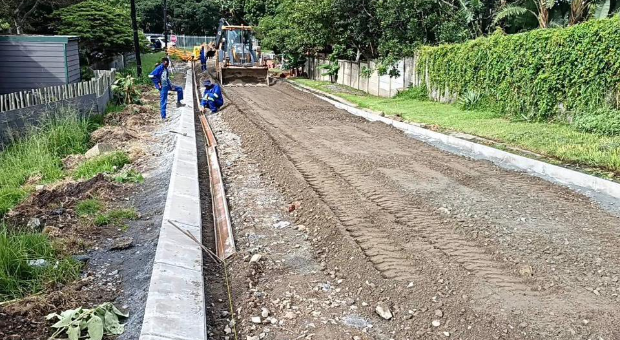
This division forms part of the Directorate of Development Planning. The function of the Housing Division is to create sustainable human settlements so that all residents have access to housing opportunities, which include rental accommodation or permanent residential structures. Secure tenure ensures external privacy, protection against the elements and access to potable water, adequate sanitary facilities and domestic energy supply.
Key contacts
General enquiries
(eg housing waiting list, indigent subsidy,
complaints/defects, housing project developments)
Telephone: (043) 705-2205/2461
Housing Manager
Telephone: (043) 705-2461
Physical address
Housing Department
1st and 5th Floor
Engineering Building
Oxford Street
East London
5201
Postal address
Directorate of Development Planning
Housing Division
PO Box 81
East London
5200
Frequently asked questions
Who is eligible for a housing subsidy?
Six main criteria need to be fulfilled in order for a person to be eligible to apply for the subsidy. A person only qualifies for a housing subsidy if:
- Married or financial dependants:
He or she is married (in terms of the civil law or in terms of a customary union) or habitually co-habits with any other person, or he or she has proven financial dependants. (For the purpose of this code, the word "spouse" includes any partner with whom a prospective beneficiary under the scheme habitually cohabits.)
- Resident:
He or she is lawfully resident in South Africa (ie a citizen of the Republic of South Africa or in possession of a permanent resident permit).
- Competent to contract:
He or she is legally competent to contract (ie over 21 years of age or married or divorced and of sound mind).
- Monthly household income:
The gross monthly household income of his or her household does not exceed R3 500. A prospective beneficiary will be required to submit adequate proof of income, and, in the case of income received through self-employment, must sign an affidavit stating the amount earned.
- Not yet a beneficiary of government funding:
Neither that person nor his or her spouse has previously derived benefits from the housing subsidy scheme, or any other state funded or assisted housing subsidy scheme which conferred benefits of ownership, leasehold or deed of grant or the right to convert the title obtained to either ownership, leasehold or deed of grant, with the exception of the consolidation subsidy, and relocation grant. A person who received only a vacant serviced site under the previous dispensation on the basis of ownership, leasehold or deed of grant, however, qualifies for a consolidation subsidy. This criterion is also not applicable to persons who qualify for relocation assistance or to disabled persons. (See below for details on assistance available to disabled persons.) In the event of a divorce, the terms of the divorce order will determine a beneficiary's eligibility.
- First-time property owner:
He or she is acquiring property for the first time, except in the case of a consolidation subsidy, and relocation assistance. This criterion does not apply to disabled persons. (See below for details on assistance available to disabled persons.)
What is the government housing subsidy grant?
The following table illustrates the new subsidy grants (effective 1 April 2002):
|
| Income category |
Existing subsidy |
New subsidy |
 |
| R0 to R1 500 |
R16 000 |
R20 300 |
 |
| R1 501 to R2 500 |
R10 000 |
R12 700 |
 |
| R2 501 to R3 500 |
R5 500 |
R7 000 |
 |
| Old aged, disabled & indigent |
R16 000 |
R22 800 |
 |
Consolidation sub:
up to R1 500 |
R8 500 |
R10 900 |
 |
Consolidation sub:
old aged, disabled & indigent |
R8 500 |
R13 400 |
 |
| Institutional subsidies |
R16 000 |
R20 300 |
|
What is the required beneficiary contribution?
- Income category R0 - R1 500 a month
Qualifying beneficiaries falling within this income category and who will not participate in the People's Housing Process will be required to make a financial contribution of R2 479 to enable the final approval of a housing subsidy application. The revised subsidy amount in this instance will therefore amount to R20 300.
Where a beneficiary qualifies for a consolidation subsidy, but will not participate in the People's Housing Process, he or she will qualify for a subsidy of R10 900 and will be obliged to make the required financial contribution of R2 479.
The following subsidy could therefore apply if:
|
 |
| |
Ind/project linked |
Consolidation |
| Subsidy amount |
R20 300 |
R10 900 |
| 15% variation (R22 800 x 15%) |
R3 420 |
R3 420 |
| |
R23 720 |
R14 320 |
| Total revised subsidy amount |
R23 720 |
R14 320 |
| Plus beneficiary contribution |
R2 479 |
R2 479 |
| Total product price |
R26 199 |
R16 799 |
|
- Beneficiaries that participate in the People's Housing Process
Due to the exemption of the People's Housing Process (PHP) projects from the National Home Builders Registration Council warranty cover, beneficiaries that opt to construct or manage the construction of their own houses will not be required to contribute R2 479. Beneficiaries of the People's Housing Process in the income category R0 to R1 500 a month will therefore qualify for a subsidy of R20 300.
Consolidation subsidy beneficiaries participating in PHP projects will not be obliged to make the said financial contribution and will therefore qualify for a subsidy of R10 900.
All beneficiaries within PHP projects will only qualify for the aforementioned subsidies if they are aged, disabled or indigent.
The following subsidy could therefore apply in respect of beneficiaries that participate in PHP projects:
|
 |
| |
Greenfield |
Consolidation |
| Subsidy amount |
R20 300 |
R10 900 |
15% variation
(R22 800 x 15%) |
R3 420 |
R3 420 |
| Total product price |
R23 720 |
R14 320 |
|
What special assistance is available to the aged, disabled and the indigent?
Beneficiaries who are aged, disabled or indigent should receive assistance regarding the realisation of their right to access to housing opportunities. Such beneficiaries will qualify for an increased subsidy amount of R22 800 in respect of Individual and Project Non-Credit Linked Subsidies and R13 400 in respect of Individual and Project Linked Consolidation Subsidies.
The following subsidy could therefore apply in respect of the aforementioned beneficiaries that do not participate in People's Housing Process projects:
|
 |
| |
Ind/Project linked |
Consolidation |
| Subsidy amount |
R22 800 |
R13 400 |
15% variation
(R22 800 x 15%) |
R3 420 |
R3 420 |
| Total product price |
R26 220 |
R16 820 |
|
What are the provincial norms and standards?
- The minimum size of completed structure shall not be less than 40m².
- The internal reticulation services are limited to water, sanitation, roads and stormwater.
- Subject to a funding limit of a maximum provisional amount of R7 300 for the services and the acquisition of land (including township establishment).
What are the minimum levels of service required?
Water: Single (metered) standpipe per erven
Sanitation: VIP per erven
Roads: Access to each erf with graded or gravel paved roads
Stormwater: Lined open channels
If a higher level of service is required (eg waterborne sanitation), the developers must motivate their decision.
Any savings achieved in the provision of services must be transferred to the top structure.
Any deviation from the norms and standards - for example, when a developer or community demands higher levels of service - will have to be financed from resources other than the housing subsidy.
What are the norms and standards for residential structures?
Project linked subsidies
- The minimum size of the completed structure shall not be less than 40m².
- The above subsidies will participate in the National Home Builders Registration Council warranty scheme.
- All top structures approved after 1 April 2002 will have to be compliant with the National Home Builders Registration Council specifications.
These specifications are found in the Home Building Manual Parts 1, 2 and 3.
People's Housing Process
- The minimum size of the completed structure shall not be less than 40m².
- The People's Housing Process does not participate in the National Home Builders Registration Council warranty scheme.
- Although it is not a requirement for the People's Housing Process to enroll in the National Home Builders Registration Council, the department requires that the top structures be built to NHBRC standards.
- The department will embark on recruiting building inspectors to monitor the quality of workmanship. The works managers involved on site will also assist in quality checks, using a standard checklist.